Childhood Anxiety: Signs Your Child May Need Professional Help
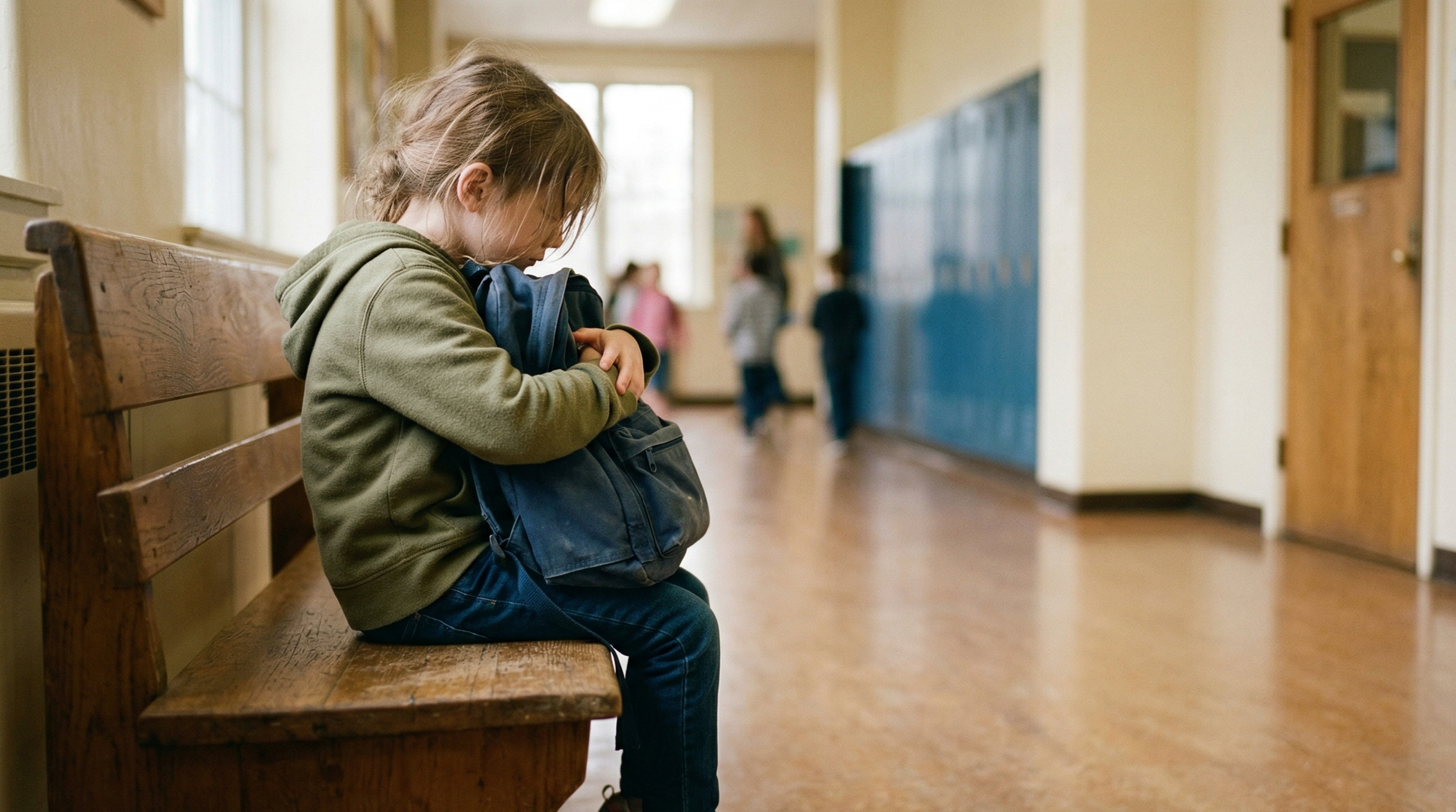
Every child experiences worry and fear at some point. Fear of the dark, nervousness before a test, or anxiety about starting a new school are all normal parts of development. But when anxiety becomes persistent, intense, and begins interfering with daily life, it may be more than a passing phase. Knowing the difference between typical childhood worry and an anxiety disorder can help parents take action at the right time.
This guide covers the most common types of anxiety in children, the signs that suggest professional help may be needed, and how anxiety is treated within an integrative psychiatric framework.
How Common Is Anxiety in Children?
Anxiety disorders are among the most prevalent mental health conditions in childhood. According to the CDC, approximately 11% of children aged 3 to 17 have been diagnosed with an anxiety disorder, making it one of the most common mental health conditions in childhood, alongside ADHD and behavioral disorders.
Despite how common it is, childhood anxiety is often under recognized. Unlike ADHD or behavioral disorders, anxiety tends to be internalized — meaning that signs of anxiety in children may be less noticeable because some children keep worries largely internal rather than acting out.
Types of Anxiety Disorders in Children
The American Academy of Child and Adolescent Psychiatry (AACAP) identifies several distinct anxiety disorders that are commonly diagnosed in children and adolescents:
Generalized Anxiety Disorder (GAD) — excessive worry about a wide range of topics including school performance, friendships, family safety, and world events, often accompanied by physical symptoms like headaches and stomachaches
Separation Anxiety Disorder — intense fear of being separated from a parent or caregiver that goes beyond what is expected for the child's age
Social Anxiety Disorder — significant fear of social situations, being judged, or embarrassing oneself in front of peers
Specific Phobias — intense, irrational fear of a particular object or situation such as dogs, thunderstorms, or vomiting
Selective Mutism — consistent failure to speak in certain social situations despite speaking freely in others
Panic Disorder — recurrent, unexpected panic attacks with physical symptoms like racing heart, shortness of breath, and dizziness
A child may have more than one anxiety disorder, and anxiety frequently co-occurs with ADHD, depression, and autism spectrum disorder, which is why a comprehensive evaluation is important.
Signs of Anxiety in Children
Anxiety often looks different in children than it does in adults. While adults can usually name what they are feeling, children may not have the vocabulary to describe their internal experience. Instead, childhood anxiety symptoms are expressed through their behavior and physical complaints.
Emotional and Behavioral Signs
Excessive worry or fear that seems out of proportion to the situation
Frequent need for reassurance from parents or teachers
Avoidance of activities, places, or situations that trigger anxiety, or tolerating situations with significant distress
Difficulty separating from parents, especially at school drop-off
Perfectionism and becoming extremely upset over small mistakes
Meltdowns or tantrums that occur during situations that provoke intense fear
Difficulty making decisions, even about minor things
Reluctance to try new activities or meet new people
Physical Signs
Frequent stomachaches or nausea, particularly before school or social events
Headaches
Difficulty falling asleep or staying asleep
Muscle tension or complaints of feeling "tight"
Fatigue from the mental and physical effort of constant worry
Changes in appetite — eating significantly more or less than usual
Signs of Anxiety Often Mistaken for Other Conditions
Anxiety can mimic or overlap with other conditions, which can lead to misdiagnosis:
Anxiety vs. ADHD — an anxious child who cannot focus because of racing thoughts or worries may appear inattentive. The NIMH notes that anxiety and ADHD co-occur in approximately 30% of children with either diagnosis.
Anxiety vs. defiance — a child who refuses to go to school or participate in activities may appear oppositional when they are actually fearful
Anxiety vs. physical illness — repeated complaints of stomachaches and headaches may lead to medical workups before anxiety is considered as the underlying cause
When To Seek Help for Childhood Anxiety
Normal childhood worry comes and goes and does not significantly disrupt daily functioning. An anxiety disorder is different. Parents should consider seeking a professional evaluation if:
The anxiety has persisted for several weeks or longer and is not improving on its own
The child is avoiding school, social activities, or situations they used to enjoy
The anxiety is affecting academic performance, friendships, or family life
Physical symptoms like stomachaches and headaches are recurring after medical causes have been considered
The child's worry is clearly excessive relative to the situation
Sleep is consistently disrupted by worry or fear
The child is experiencing panic attacks
Parents find themselves significantly accommodating the child's anxiety, such as allowing them to skip activities, answering the same reassurance questions repeatedly, or staying home from work
Early intervention for childhood anxiety leads to better outcomes. Research from the NIMH shows that untreated childhood anxiety can persist into adulthood and increase the risk of developing depression, substance use disorders, and additional anxiety disorders.
How Is Childhood Anxiety Diagnosed?
There is no single test for anxiety. A thorough psychiatric evaluation includes:
A detailed history of the child's symptoms, triggers, and behavioral patterns
Information from parents, teachers, and other caregivers
Screening for co-occurring conditions such as ADHD, depression, OCD, and autism spectrum disorder
Assessment of family history, since anxiety has a strong genetic component
Evaluation of lifestyle factors including sleep quality, physical activity, nutrition, and screen time
Treatment Options for Child Anxiety
Effective anxiety treatment for children often involves a combination of strategies. The AACAP recommends a multimodal approach that may include:
Cognitive Behavioral Therapy (CBT) — the most well-studied therapy for childhood anxiety, focused on helping children identify anxious thoughts and develop coping strategies. Dr. Bowers can coordinate with a child's therapist to align treatment approaches.
Parent-Based Approaches — such as SPACE (Supportive Parenting for Anxious Childhood Emotions) and similar approaches, that focus on helping parents to support their children and reduce accommodating behaviors that inadvertently reinforce anxiety in children
Medication management — SSRIs are the first-line medication for childhood anxiety disorders and have strong evidence supporting their safety and effectiveness. Medication management at Bowers Integrative Psychiatry involves shared decision-making and careful monitoring.
Mindfulness-based interventions — MBSR techniques, breathing exercises, and mindful movement can help children manage anxiety symptoms in real time. Research from the NIH supports mindfulness as an effective adjunct for anxiety.
Lifestyle optimization — improving sleep hygiene, increasing physical exercise, spending time in nature, and reducing caffeine can all reduce anxiety severity
Nutritional supplementation — certain supplements may help augment medication effectiveness for anxiety when used under clinical guidance
What Parents Can Do at Home
While professional treatment is important for clinical anxiety, parents play a critical role in supporting their child's progress:
Validate the feeling without reinforcing avoidance — saying "I can see you are really scared, and I believe we can get through this together" acknowledges the anxiety without encouraging the child to avoid the situation
Avoid excessive accommodation — while it is natural to want to protect an anxious child, consistently removing challenges prevents them from learning that they can cope
Model calm behavior — children look to their parents for cues about how to respond to stressful situations
Limit reassurance-seeking loops — instead of answering the same worry question repeatedly, help the child develop their own coping response
Frequently Asked Questions
At what age can anxiety be diagnosed?
Anxiety symptoms can emerge very early in childhood, and some anxiety disorders may be identified in preschool-aged children. Separation anxiety is particularly common in preschool-age children, while school avoidance in children commonly emerges in school-aged children and teens. Dr. Bowers evaluates children of all ages for anxiety disorders.
Is it possible for anxiety to go away on its own?
Mild, situational anxiety often resolves on its own. However, anxiety that persists for weeks, worsens over time, or significantly impacts daily functioning is unlikely to resolve without intervention. The NIMH notes that early treatment is associated with better long-term outcomes.
Can anxiety and ADHD occur together?
Yes. Approximately 30% of children with ADHD also have an anxiety disorder, and the reverse is also common. A comprehensive evaluation that assesses for both conditions ensures accurate diagnosis and an effective treatment plan. Read more about ADHD symptoms in children.
Will my child need medication for anxiety?
Not necessarily. Some children respond well to therapy and lifestyle changes alone. Others benefit from medication, particularly SSRIs, which are well-studied for childhood anxiety. The decision is always made collaboratively at Bowers Integrative Psychiatry, based on symptom severity and the family's preferences.
Are telehealth appointments available for anxiety evaluations?
Yes. While in-person appointments are recommended for initial evaluations, follow-up appointments can be conducted via telehealth. Telehealth is available throughout Colorado, Maryland, Montana, New York, Oregon, and Washington.
Megan Bowers, MD, PhD is a child, adolescent, and adult psychiatrist specializing in neurodevelopmental disorders, and is the founder of Bowers Integrative Psychiatry and CEO and Medical Director of The Mind Grove TMS Center. Her work focuses on integrative approaches to mental health, combining evidence-based medication management with lifestyle and mind–body interventions.
The information provided on this website is for educational purposes only and is not intended as medical advice. It should not be used to diagnose or treat any condition. Please consult a qualified healthcare professional for individualized medical guidance. Use of this website does not establish a physician–patient relationship.
Book a Free Introductory Call
If your child's worry, fear, or avoidance is affecting their ability to enjoy school, friendships, or daily life, a free 15-minute introductory call is the first step. This conversation allows you to share what you are observing and learn whether a comprehensive evaluation may be appropriate.
Bowers Integrative Psychiatry provides in-person appointments for children and adolescents in Colorado Springs and telehealth throughout Colorado, Maryland, Montana, New York, Oregon, and Washington. View rates and fees or frequently asked questions for more information.
